Coastal field notes

Reading the life of a tide pool.

When the tide drops along a rocky shore, it leaves behind shallow pools holding anemones, sea stars, barnacles, and snails. This site explains how those pools form, what lives in them on Canadian coasts, and how to look closely without doing damage.

A shallow rock pool left in the intertidal zone of a rocky shore at low tide
A rock pool on an exposed rocky shore at low tide. Photo via Wikimedia Commons.
What a tide pool is

Pockets of seawater stranded between tides

A tide pool is simply seawater trapped in a depression in rock when the sea retreats. The animals and seaweeds living there spend part of each day submerged and part exposed to air, sun, rain, and temperature swings. That daily rhythm shapes everything about who survives where.

Tides

Two cycles a day

Most Canadian coasts experience two high tides and two low tides roughly every 24 hours and 50 minutes. The vertical distance between them — the tidal range — decides how much shore is exposed and for how long.

Zonation

Bands of life

Species sort themselves into visible horizontal bands. Barnacles and periwinkles tolerate long exposure high on the rock; anemones and sea stars sit lower where they stay wet longer.

Stress

A demanding place

Residents endure changing salinity, oxygen, and temperature within a single tide cycle. Many cope by closing shells, retracting tentacles, or sheltering in damp crevices until the water returns.

Reading

Three field guides to start with

Northern acorn barnacles covering intertidal rock at Crow Head, Newfoundland
Northern acorn barnacles photographed at Crow Head, Newfoundland. Photo via Wikimedia Commons.
Canadian shores

From Newfoundland to the Pacific

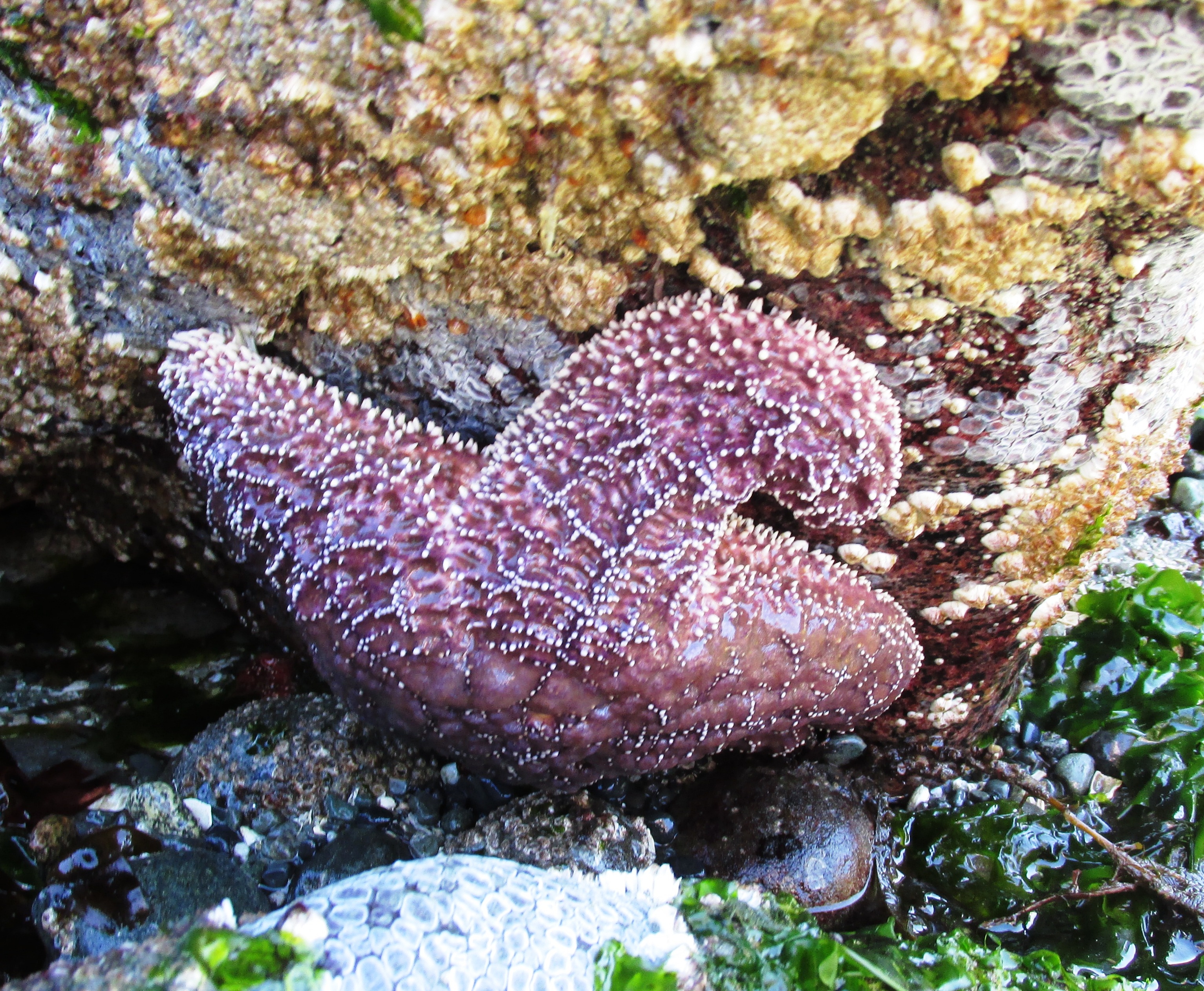
Canada has rocky intertidal shore on three oceans, and the cast of characters differs by coast. Atlantic shores in Newfoundland and the Maritimes are dominated by northern acorn barnacles, blue mussels, rockweed, and dog whelks. Pacific shores in British Columbia add ochre sea stars, aggregating anemones, and a wider range of chitons and limpets.

Wherever you are, the same reading skills apply: check the tide, watch the zonation bands, and move slowly. The articles here use examples drawn from these Canadian coasts.

About this site
Questions or corrections

Get in touch about the field notes

If you spot an error, want to suggest a species to cover, or have a question about a coast, send a note through the contact form.

Open the contact form