Common intertidal species on Canadian rocky shores

Tide-pool residents are easiest to learn as a set of recurring groups. Once you recognise barnacles, mussels, snails, anemones, sea stars, and chitons, most of what you see on a rocky shore falls into place. The exact species vary between Canada's Atlantic and Pacific coasts, but the body plans and the way each group copes with exposure stay the same.
Reading the zones first
Before naming animals, read the bands. High on the rock, where exposure is longest, you find the toughest residents: acorn barnacles and periwinkle snails. Lower down, where the pools hold water longer, anemones and sea stars appear. This zonation is one of the clearest patterns in nature, and it tells you where to look for each group.
| Zone | Typical residents | Why they live there |
|---|---|---|
| High shore | Acorn barnacles, periwinkles | Tolerate long air exposure and drying |
| Mid shore | Mussels, dog whelks, limpets | Balance feeding time against exposure |
| Low shore / pools | Anemones, sea stars, chitons | Need to stay wet and avoid drying out |
Barnacles
Barnacles look like tiny volcanoes cemented to the rock. On Atlantic shores in Newfoundland and the Maritimes, the northern acorn barnacle covers exposed surfaces in pale crusts. Each one is a crustacean living head-down inside its plates; when submerged it opens and sweeps the water with feathery legs to feed. When the tide drops, it seals shut to hold moisture.

Mussels and snails
Blue mussels form dense beds in the mid shore, anchored by tough threads. Among and above them live grazing snails: periwinkles that scrape algae from the rock, and dog whelks that drill into barnacles and mussels to feed. Empty whelk-drilled shells, each with a neat round hole, are a common find and a clear sign of this predator at work.
Anemones
Sea anemones are soft-bodied relatives of corals. Submerged, they spread a ring of tentacles to catch drifting food; exposed to air, they pull the tentacles in and sit as a glistening blob, which is how you most often see them at low tide. On Pacific shores, the aggregating anemone forms pale clones that carpet rock faces, while larger green anemones occupy individual pools.

Sea stars
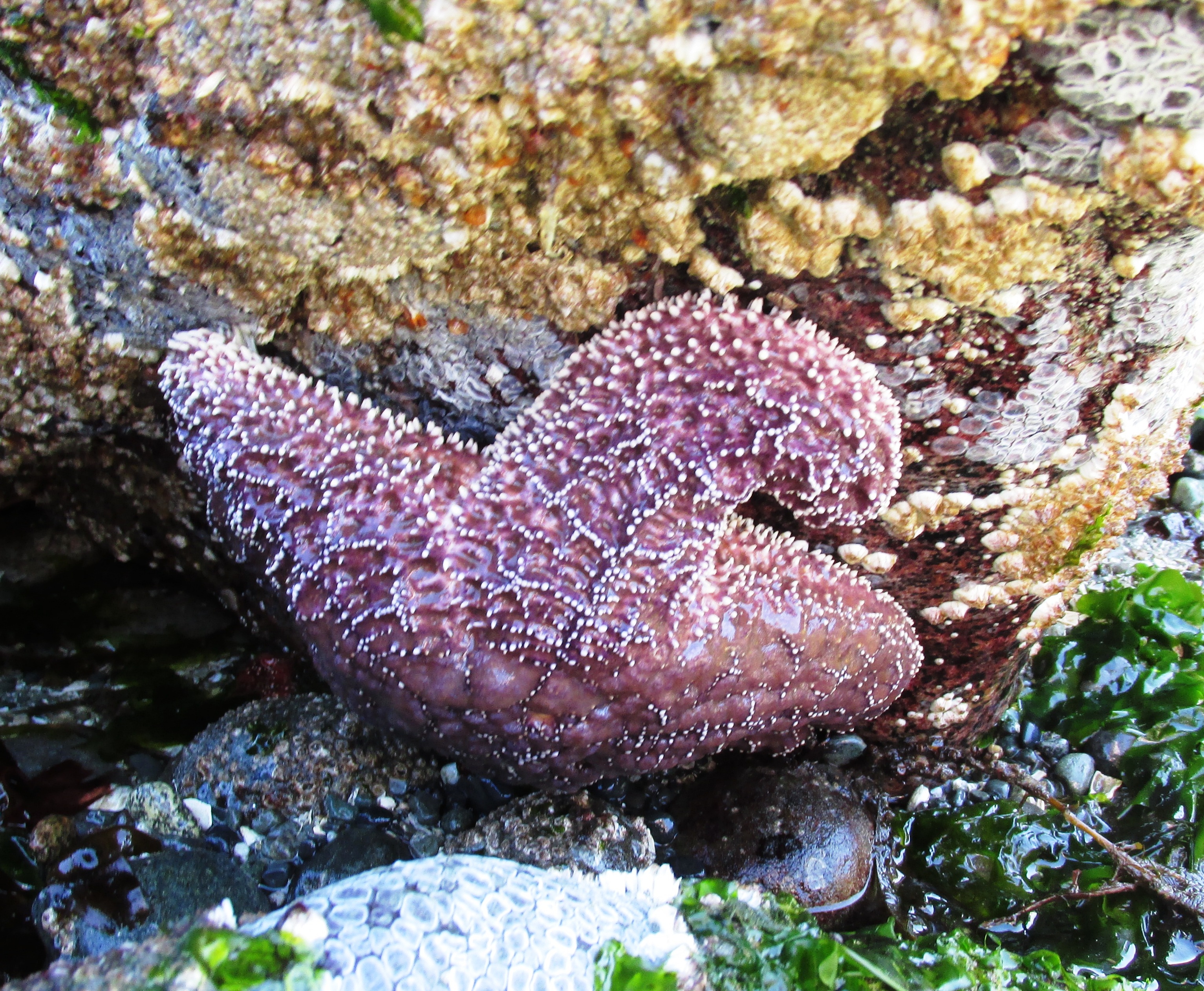
Sea stars are slow-moving predators. On the Pacific coast the ochre sea star, which ranges from orange to deep purple, preys on mussels and barnacles and is considered a keystone species: its feeding helps decide how much of the rock the mussels can claim. Sea stars move on hundreds of tube feet and can be surprisingly firmly attached, which is one reason they should never be pried loose.
Chitons and limpets
Chitons are oval molluscs protected by eight overlapping plates, clamped tight to the rock. Limpets are single cone-shaped shells doing much the same job. Both graze algae and clamp down hard when disturbed or exposed, which is exactly why you should look but not lift — the seal that protects them is also what holds them to the rock.
How to tell groups apart at a glance
Volcano shape cemented to rock: barnacle. Cone or coiled shell that moves: limpet or snail. Eight plates in a row: chiton. Soft column with tentacles: anemone. Arms radiating from a centre: sea star. Naming the group first makes a field guide far easier to use afterwards.
Sources and further reading: species accounts published by Fisheries and Oceans Canada and Parks Canada. Local species composition varies; a regional field guide will confirm exact identifications.